

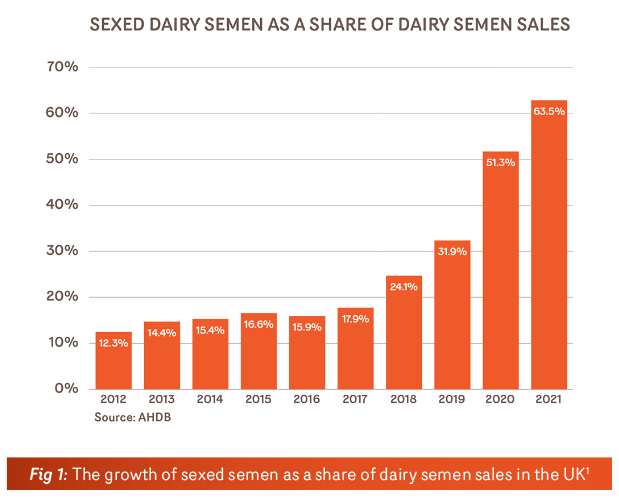
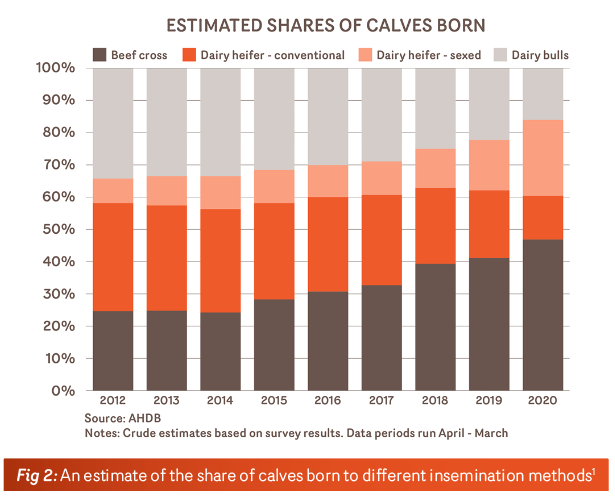
Sexed semen is a rapidly growing alternative to conventional semen for the artificial insemination of dairy cows. By 2021, almost two-thirds of all semen sold into the dairy industry was sexed (Fig 1) and the number of dairy heifers born as a result of fertilisation with sexed semen was double those born to conventional semen1 (Fig 2), demonstrating an increased willingness of dairy farmers to look at the impact of the dairy industry on male calves.
Initially, analogue machines were used to sort semen – these were slow and bulky and inefficient. New machines are 1000x more effective at sorting semen, resulting in improved purity and the production of straws each containing 4 million spermatozoa. As a result, sexed semen currently produces a 90% sex bias and vastly improved conception rates compared to those recorded when the technology was initially utilised2.
The drive for enhanced calf and cow welfare, alongside a demand for greater production efficiency and the focus on improved sustainability in agriculture means the use of sexed semen will continue to increase in the dairy sector.
Conventional semen leads to a surplus of unwanted male dairy calves, which are more likely to lead to dystocia compared to heifer calves (reducing welfare and incurring economic losses3) and also have a lower economic value so, historically, were often euthanised shortly after birth. Many milk buyers now prohibit farmers from euthanising calves under eight weeks old and the use of sexed semen has helped farmers to fulfil this requirement. In addition, this technology can reduce the live exports of unwanted male calves.
Sexed semen can be used to generate heifers for dairy herd replacements and herd expansion at a faster rate from within the herd, thereby minimising biosecurity risks associated with bringing in animals from different herds3. Heifers tend to have lower metabolic stress than lactating adults and so are associated with higher conception rates to AI4, so using sexed semen in this group for replacements is economically beneficial5.
Sustainable herd expansion and genetic gain can be delivered by inseminating high performing adults with sexed semen to produce genetically superior female calves6 and use lower-cost beef semen on all dams that are not considered suitable to produce replacements. This results in increased genetic gain, increased value of any beef output from the dairy herd, and reduced greenhouse gas emissions from rearing unwanted beef calves.
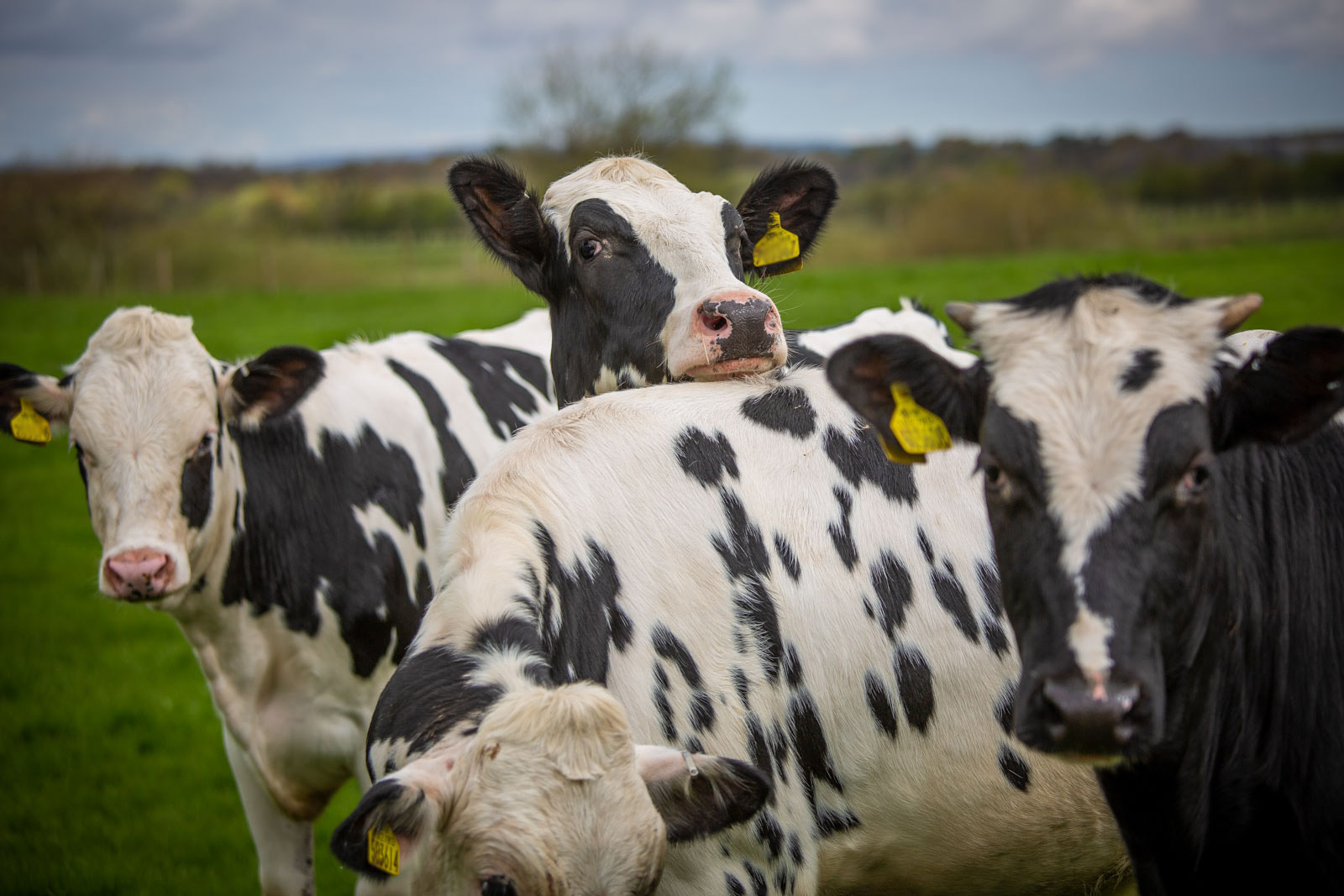
It is well known that the conception rate (CR) for sexed semen is poorer than with conventional semen by about 5-10%7 despite modifications to the sorting process. The semen may be viable for a shorter period of time and so timing is important, with insemination as close as possible to ovulation being advantageous8.
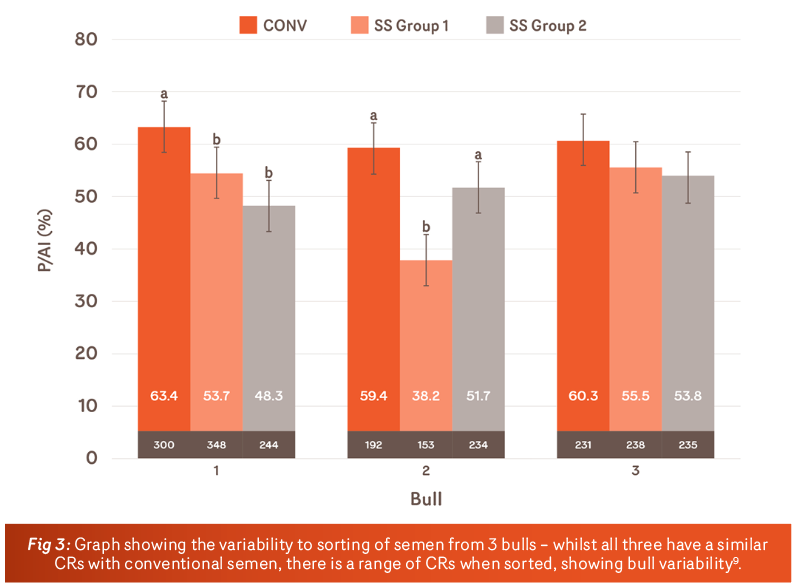
The semen from some bulls seems to be more susceptible to damage during the sorting process and so, to mitigate this risk, it is recommended to use mixed, sorted semen from a larger team of bulls (at least 5)9.
As a result of the damage caused by the sorting process, semen straws should be handled very carefully8.
Suggested process for straw handling on the day of AI8:
Don't appear to have Image of AI delivery
Whilst the cost of sexed semen straws is higher than conventional semen, overall herd economic benefits are clear. A 2021 study, conducted by Synergy Farm Health, looked at 200 Spring block calving dairy heifers, which were synchronised before AI with sexed semen5 and which achieved a 53.5% CR to first AI. The total costs were calculated (Table 1) and mitigated against the economic gain (Table 2). The results showed a net benefit of the synch programme of £88.555 per heifer.

Table 1: Overall costs for synchronised heifers5

Table 2: Overall benefits for synchronised heifers5
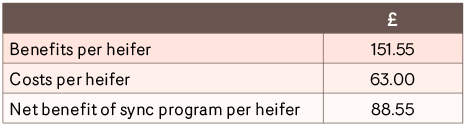
Table 3: Net cost benefit per heifer5
You can find out more information about protocols using the high progesterone device, PRID® Delta here
References:
Prescriptions decisions are for the person issuing the prescription alone. Use medicines responsibly (www.noah.co.uk/responsible)
Ceva Animal Health Ltd
Explorer House, Mercury Park, Wooburn Green, Buckinghamshire HP10 0HH