

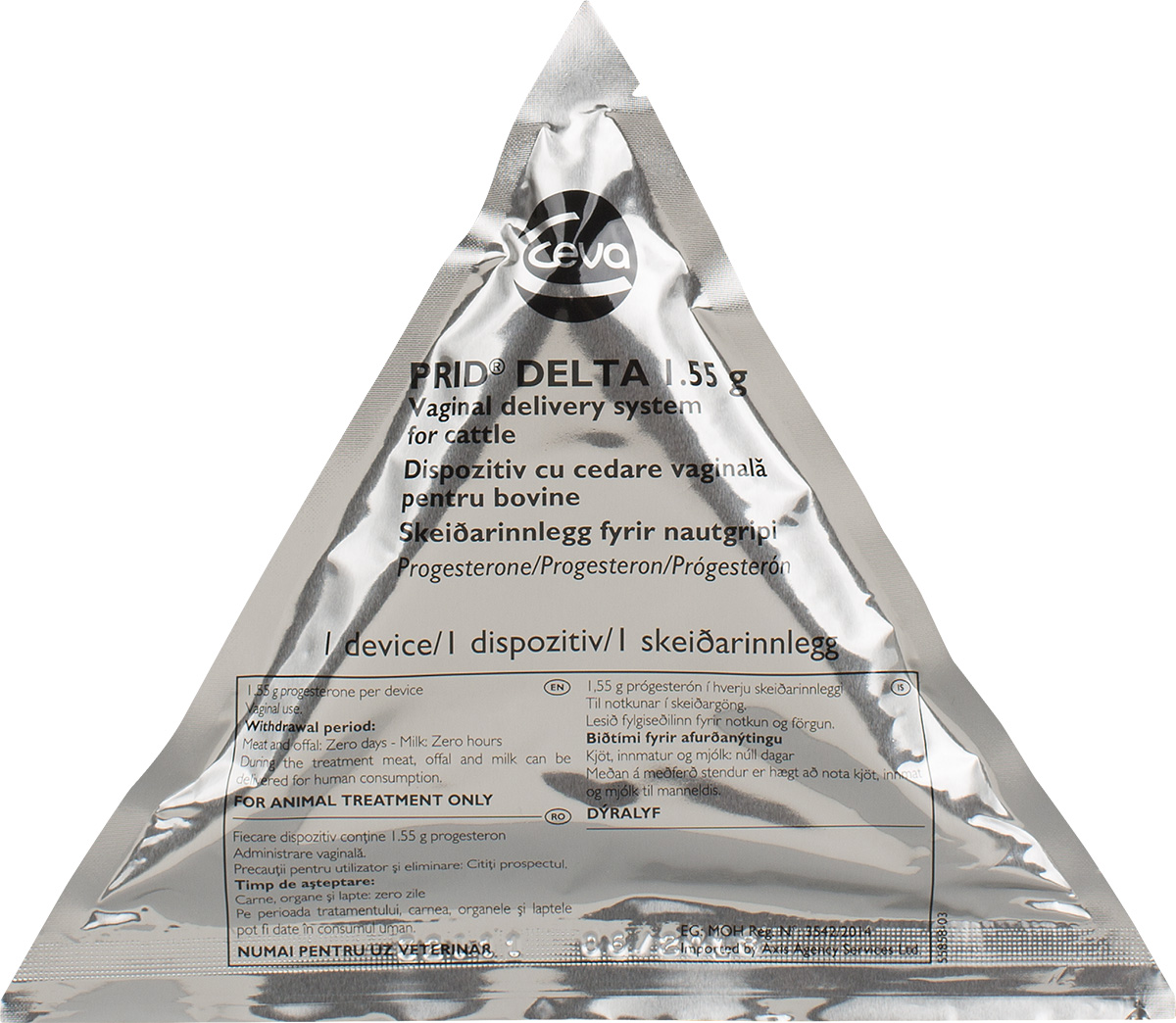
PRID® Delta is the progesterone releasing device (in the U.K. market) with a higher progesterone content and a larger surface area, achieving greater circulating P4 levels in cattle1.
Every farm is different, and your vet will determine the best fertility management protocol for your herd. PRID® Delta can be used in a range of different protocols alongside GnRH and prostaglandin and is licensed for use as part of fixed-time AI and embryo transfer protocols.
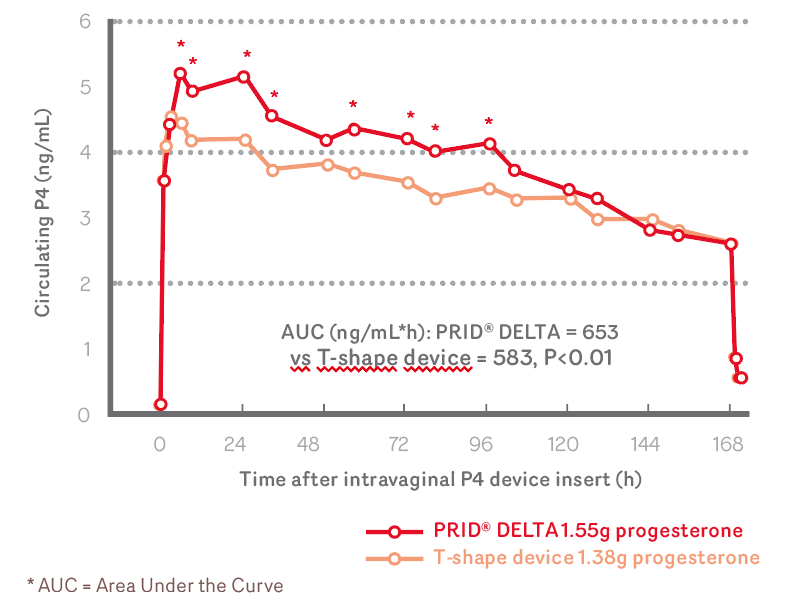
Graph comparing the circulating P4 levels achieved in ovariectomised cattle with PRID® DELTA to a T-Shaped device, over time following
PRID® Delta contains 12% more progesterone in total and has 29% more surface area in contact with the vaginal wall than other devices ensuring maximum P4 absorption.
‘Increased surface area has been suggested as a parameter that could be used to increase plasma progesterone levels’2.
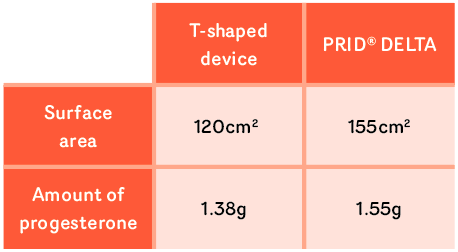
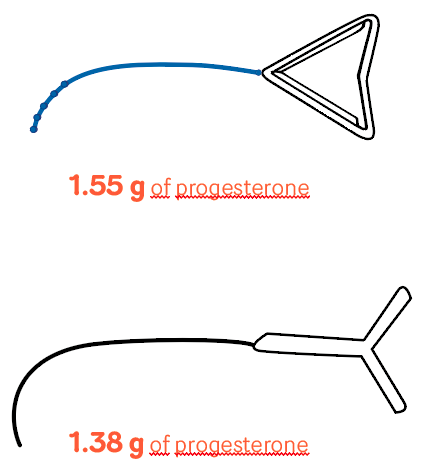
Comparing the progesterone concentration of PRID® DELTA with a T shaped device
The release of progesterone from PRID® DELTA mimics that of the corpus luteum3,4 and so replicates and enhances the natural cycle of high yielding cattle.
The higher levels of circulating progesterone delivered by PRID® DELTA could help to improve:
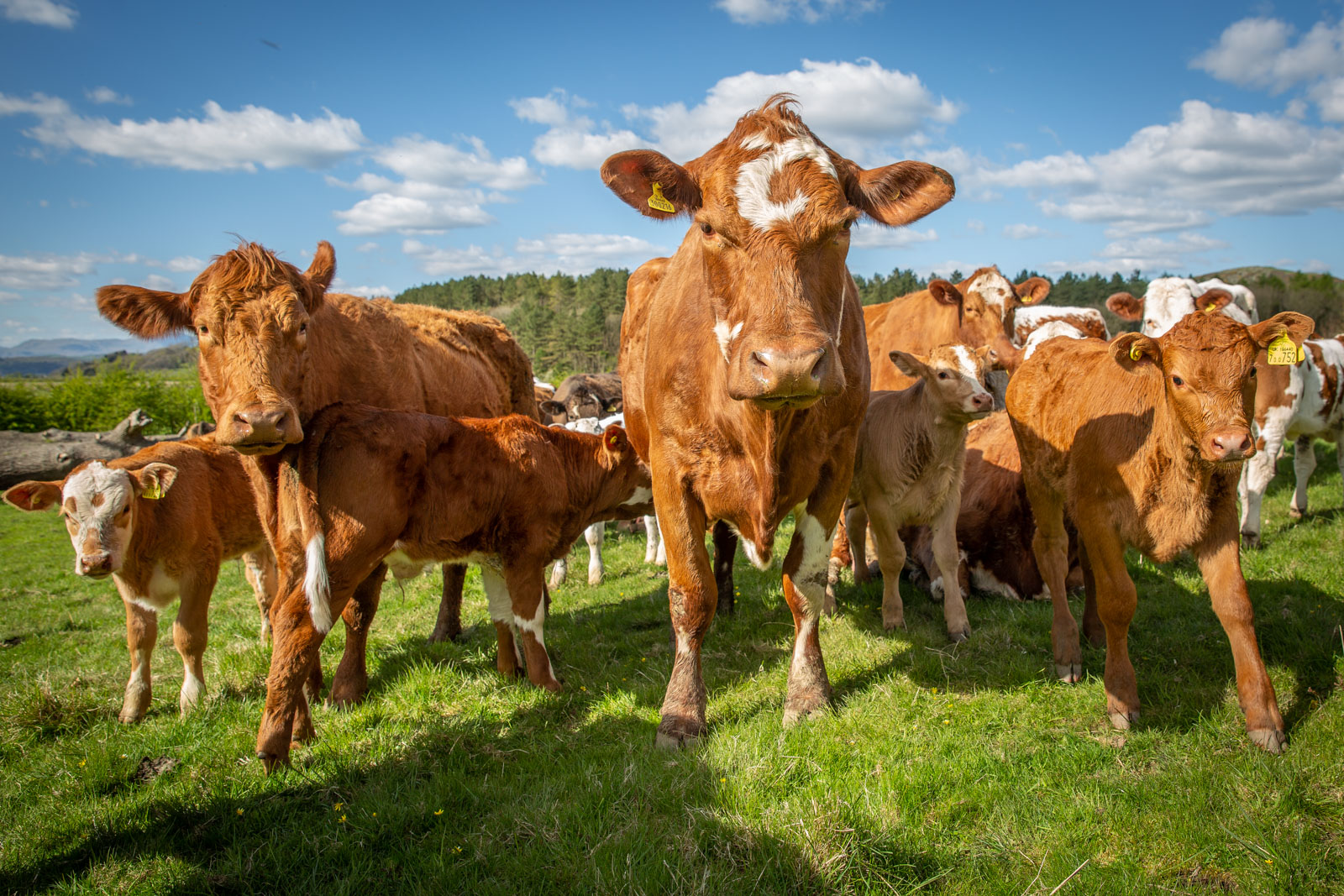
PRID® DELTA can demonstrate over 98% retention rates in adult cows5. 99.5% retention rates have also been demonstrated in cross-bred heifers6.
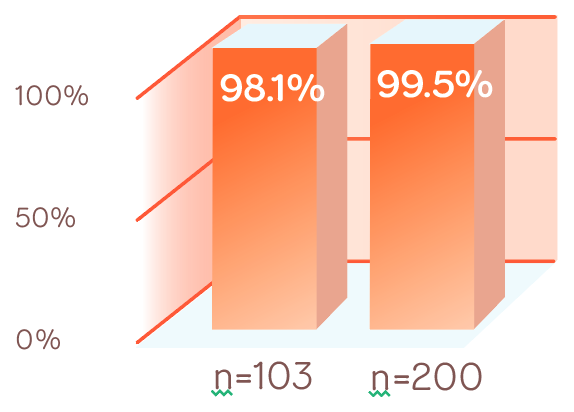
Graph highlighting the retention rates of PRID® DELTA in 103 adult cows5 and 200 cross-bred heifer6.
PRID® DELTA’s triangular shape and flat sides allows more even pressure distribution on the reproductive tract, with both sides leaning against the vagina’s inner wall for maximal surface contact and cow comfort.
T-shaped devices sit straight in the vagina, potentially applying pressure with each of their branch extremities.
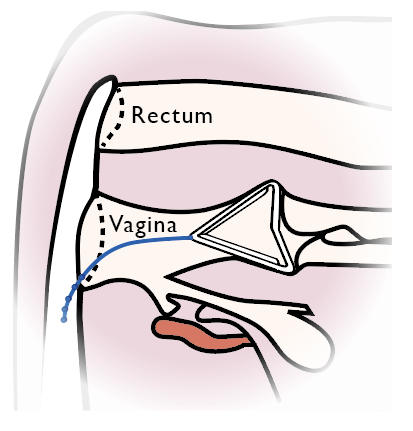
Schematic diagram showing the position of PRID® DELTA, once inserted, and contact area with the vaginal wall.
This video explains exactly how to insert the PRID® DELTA device in adult cows and heifers.
PRID® DELTA is intended for single use only and should be inserted via the unique applicator.
Clean and disinfect the applicator after each use.
Intravaginal devices can lose elasticity if they are left in the applicator for too long.

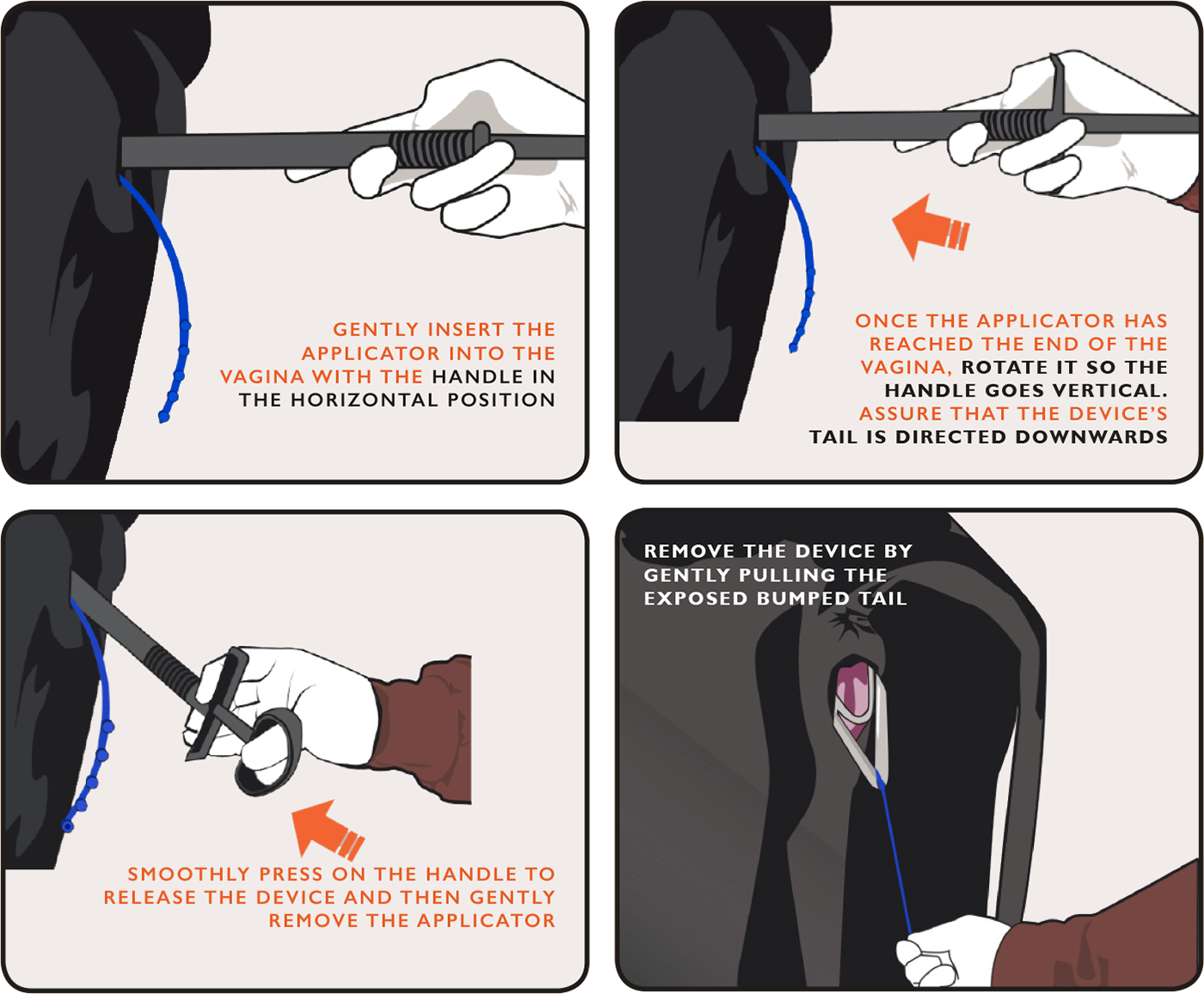
Removal is significantly improved by the grip plastic tail5
Gloves are required at all times when handling progesterone devices.
PRID® DELTA devices come individually wrapped which:
Steroid hormones, such as progesterone, have been shown to be affected by sunlight and photolysis will break down the active substance7.
The individual wrapping of each device minimises the risk of progesterone breakdown caused by exposure to sunlight.
The PRID® Delta SPC is available here.
References:
PRID® DELTA 1.55g Vaginal delivery system for cattle contains 1.55g progesterone per device. INDICATIONS: For the control of the oestrus cycle in cows and heifers including: Synchronisation of oestrous in cycling cattle. To be used in combination with a prostaglandin (pGF2). Induction and synchronisation of oestrous in non-cycling cattle. To be used in combination with a prostaglandin and equine Chorionic Gonadotropin (eCG, in the past called pMSG). CONTRA-INDICATIONS: Do not use in sexually immature heifers. Do not use before 35 days have passed since previous calving. Do not use in animals suffering from infectious or non-infectious disease of the genital tract. Do not use in pregnant animals. See section Use during pregnancy and lactation. ADVERSE REACTIONS: During the course of the seven- day treatment, the device may induce a mild local reaction (i.e. inflammation of the vaginal wall). A clinical study carried out with 319 cows and heifers has demonstrated that 25% of animals presented ropy or cloudy vulvar secretions at the device removal. This local reaction disappears rapidly without any treatment between removal and insemination and does not affect fertility at inseminations nor pregnancy rates. If you notice any serious effects or other effects not mentioned in this leaflet, please inform your veterinary. DOSAGE, ROUTE AND METHOD OF ADMINISTRATION: Vaginal use. 1.55 g of progesterone / animal for 7
Prescriptions decisions are for the person issuing the prescription alone. Use medicines responsibly (www.noah.co.uk/responsible)
Ceva Animal Health Ltd
Explorer House, Mercury Park, Wooburn Green, Buckinghamshire HP10 0HH